
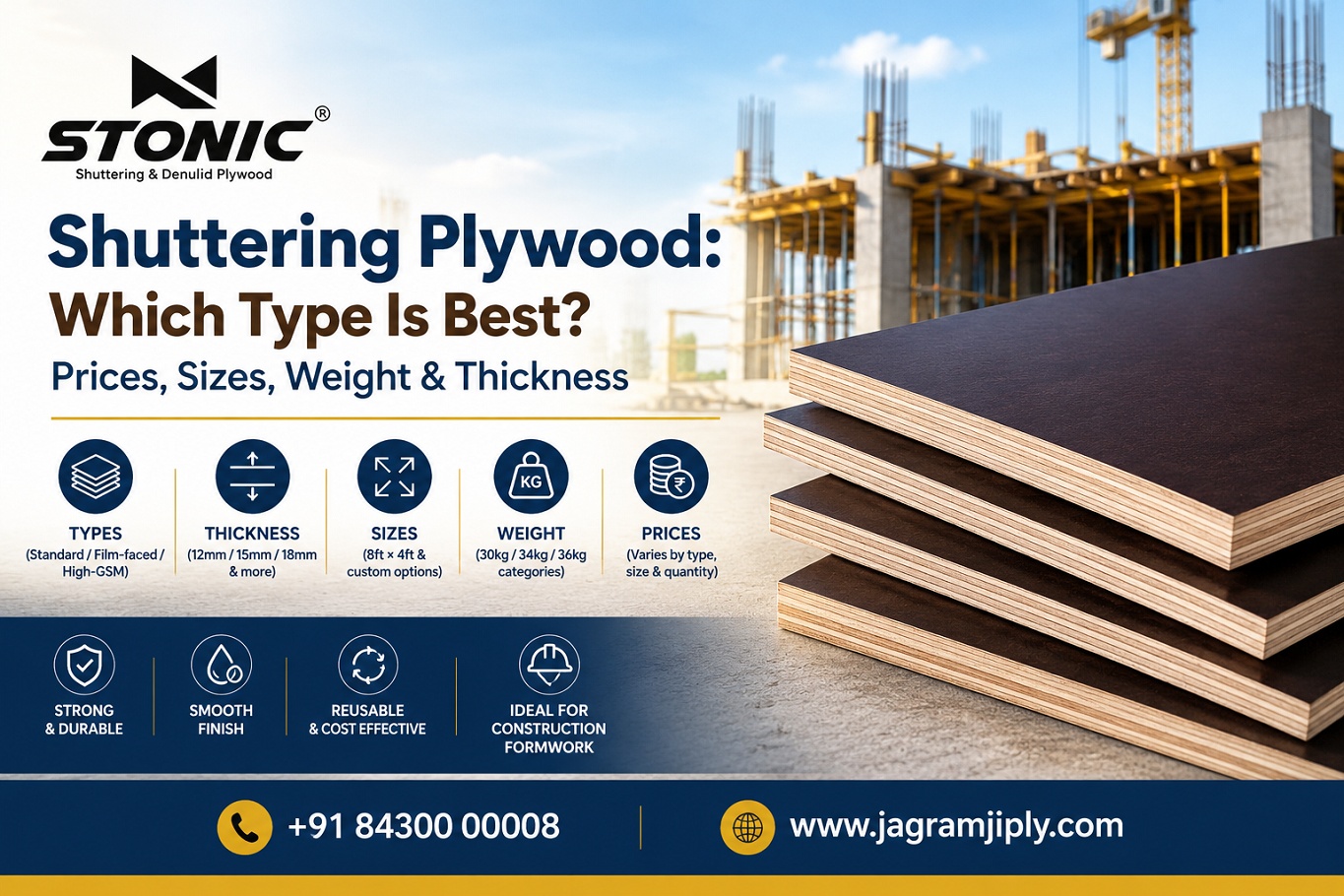
On a construction site, choosing the right shuttering plywood can affect concrete finishing, handling, and the overall cost of formwork. A sheet that looks affordable at first may not offer the best value if it wears out quickly or does not suit the project’s load requirements.
So, which Shuttering Plywood should you choose? The answer depends on the type of construction, required thickness, panel weight, surface finish, and expected reuse.
Here is a practical guide to help builders, contractors, and construction professionals make an informed decision.
What Is Shuttering Plywood?
Shuttering plywood is a construction-grade panel used to create temporary moulds, also known as formwork, for pouring concrete. It helps shape structural elements such as slabs, beams, columns, and walls until the concrete can support itself.
Unlike plywood intended for furniture or interior decoration, shuttering plywood is designed for demanding construction conditions. Its bonding quality, strength, surface treatment, and dimensional stability are important when selecting a suitable product.
Types of Shuttering Plywood
The right type depends on your project’s requirements and the conditions in which the panels will be used.
1. Standard shuttering plywood
This option may suit projects where initial purchase cost is a priority and the expected number of uses is limited. Always check the panel’s specifications and suitability for the intended formwork.
2. Film-faced shuttering plywood
These panels feature a resin-impregnated surface film that helps create a smoother concrete finish and makes cleaning easier when the panels are handled correctly. Film quality, core construction, bonding, and edge protection influence performance.
3. High-GSM shuttering plywood
High-GSM film-faced options use a heavier surface overlay. Depending on the complete panel construction, this can be useful for projects where surface durability and repeated use are important. Film weight alone does not determine overall quality.
Jagramji Ply offers shuttering plywood options under product ranges such as Stehlem and Stonic, with specifications designed for different construction requirements.
Which Thickness Is Best for Shuttering Plywood?
Thickness should be selected according to the formwork design, support spacing, concrete pressure, and panel dimensions. Common options include 12 mm, 15 mm, and 18 mm, although other thicknesses are available for specific requirements.
- 12 mm: May suit certain applications where the formwork design permits thinner panels.
- 15 mm: An intermediate option for projects requiring different strength and handling characteristics.
- 18 mm: A commonly used option for applications where greater panel thickness is required.
- 21 mm and above: May be considered for specialised or demanding applications, depending on the engineering design.
There is no single thickness that is best for every project. Follow the formwork design and recommendations from the responsible site or structural engineer rather than choosing by thickness alone.
Standard Shuttering Plywood Sizes
A commonly available sheet size is 8 feet × 4 feet, approximately 2440 mm × 1220 mm. Other dimensions and thicknesses may be available depending on the product and manufacturer.
Jagramji Ply lists a range of shuttering plywood dimensions and thickness options. Confirm the exact size, thickness tolerance, and availability with the supplier before ordering, particularly for bulk requirements.
Shuttering Plywood Weight: Why Does It Matter?
Weight can help buyers compare product specifications and understand handling requirements. Jagramji Ply’s Stehlem range includes product categories described as 30 kg, 34 kg, and 36 kg shuttering plywood.
These are product weight categories, not universal weights for every plywood sheet. Actual weight can vary with dimensions, thickness, core materials, moisture content, and construction.
A heavier panel is not automatically the best choice. Compare weight alongside strength, bonding, surface quality, and suitability for the intended application.
What Is the Price of Shuttering Plywood?
The price of Shuttering Plywood varies with thickness, sheet dimensions, core quality, surface film, bonding, product specifications, order quantity, and delivery location.
Instead of comparing quotations by price alone, check whether the products being compared have the same dimensions and specifications. It is also useful to consider expected reuse under actual site conditions, because careful handling and maintenance influence long-term value.
For current prices and bulk-order enquiries, contact the manufacturer or authorised supplier for a quotation based on your requirements.
How to Choose the Right Shuttering Plywood Manufacturers
When evaluating Shuttering Plywood manufacturers, consider these points:
- Check the product specifications and applicable quality standards.
- Inspect surface finish, edges, bonding, and panel consistency.
- Ask about available sizes, thicknesses, and weight categories.
- Confirm recommended applications and realistic reuse expectations.
- Review storage, cleaning, and handling instructions.
- Compare complete quotations rather than only the price per sheet.
Jagramji Ply manufactures shuttering plywood products for construction and formwork applications. You can explore its Stehlem shuttering plywood range and Stonic shuttering plywood range to review available product details.
Final Thoughts
The best shuttering plywood is the one that matches your formwork design, site conditions, finishing requirements, and budget. Compare the type, thickness, size, weight, surface quality, and expected reuse before making a purchase.
By reviewing specifications carefully and choosing a suitable product from a reliable manufacturer, construction teams can make more informed procurement decisions and manage formwork costs more effectively.