
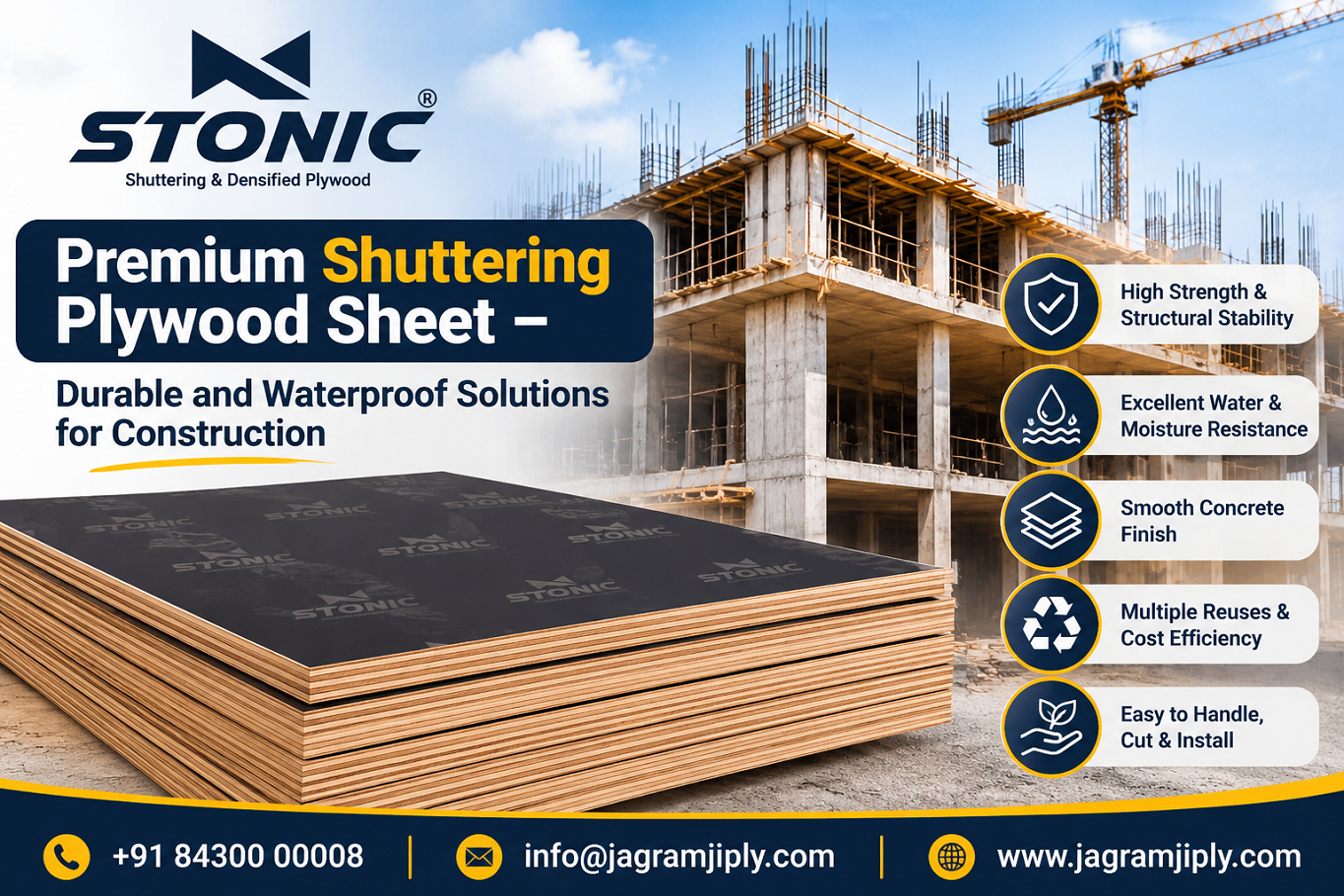
The construction industry relies on reliable materials to ensure structural stability, efficient work and quality finishing. From buildings to commercial developments and infrastructure projects choosing the right formwork material is essential for achieving consistent construction results. A Premium Shuttering Plywood Sheet is widely used in formwork because of its strength, surface quality and moisture-resistant properties.
Shuttering plywood provides a mould for freshly poured concrete helping maintain the required shape and dimensions until the concrete becomes sufficiently strong. Its durability and suitability for repeated applications make it a practical choice for builders, contractors and construction companies.
What Is Premium Shuttering Plywood?
Shuttering plywood is a manufactured plywood product designed for concrete formwork applications. It is commonly used during the construction of slabs, beams, columns, foundations and concrete walls.
These sheets are generally made by bonding layers of wood veneers under controlled pressure and temperature. Depending on the product specification they may also feature surface coatings that help improve moisture resistance and facilitate the removal of concrete after casting.
Premium-grade products are designed to provide performance under demanding construction-site conditions.
1. Provides Strength and Structural Stability
Strength is one of the important considerations when selecting plywood for concrete formwork. During casting wet concrete creates pressure against the formwork surface. The plywood must withstand these conditions without bending or damage.
High-quality shuttering sheets are manufactured with bonded veneer layers that provide stability and support consistent performance.
Their strength depends on factors, including:
• Plywood thickness and construction.
• Quality of wood veneers.
• Adhesive bonding strength.
• Manufacturing process.
• Proper spacing of supports and formwork design.
Selecting the grade and thickness helps contractors achieve reliable formwork performance.
2. Offers Better Water and Moisture Resistance
Construction materials are frequently exposed to water, humidity, cement mixtures and changing weather conditions. Ordinary plywood may deteriorate when repeatedly exposed to moisture.
Premium shuttering plywood is available with moisture- bonding and protective surface treatments that help reduce water penetration.
These properties can help:
• Reduce moisture-related deterioration.
• Maintain sheet integrity during work.
• Support repeated formwork applications.
• Improve durability under site conditions.
• Reduce premature material replacement.
It is important to check the manufacturers specifications because waterproof and moisture-resistant are not always terms.
3. Delivers a Smooth Concrete Surface Finish
The quality of the formwork surface directly influences the appearance of concrete. Uneven or damaged plywood surfaces can leave marks and imperfections after the formwork is removed.
Shuttering plywood with a finished surface provides a relatively smooth contact area for concrete casting.
This helps construction professionals achieve concrete surfaces and may reduce additional finishing requirements.
For results contractors should ensure that the sheets are clean correctly positioned and treated with a suitable concrete release agent before use.
4. Supports Multiple Reuses and Cost Efficiency
Construction projects often require formwork materials for several casting cycles. Using durable plywood that can be reused under appropriate conditions helps improve material utilisation and manage project expenses.
Premium shuttering can support repeated applications when handled and maintained correctly.
The number of possible reuses depends on:
- Manufacturing quality and sheet thickness.
- Surface coating and bonding performance.
- Concrete exposure conditions.
- Handling during installation and removal.
- Cleaning and storage practices.
Proper maintenance can help extend the useful life of plywood and reduce unnecessary replacement costs.
5. Easy to Handle, Cut and Install
Ease of handling is another important advantage of plywood in construction applications. Shuttering sheets can be cut and positioned according to different formwork dimensions and project requirements.
Their versatility makes them suitable for different concrete structures, including:
- Residential building slabs.
- Commercial building columns.
- Concrete beams.
- Foundation structures.
- Wall formwork.
- Industrial and infrastructure projects.
Correct installation, adequate support and proper fixing are essential for maintaining formwork stability and construction safety.
6. Common Applications of Shuttering Plywood Sheets
Premium-quality shuttering plywood is used across various construction activities where temporary concrete moulds are required.
Residential Construction
Builders use plywood formwork for casting roof slabs, floor slabs, beams, columns and foundations in residential buildings.
Commercial Buildings
Office complexes, shopping centres, hotels and other commercial developments require dependable formwork materials for different concrete structures.
Industrial Construction
Factories, warehouses and industrial facilities use suitable shuttering plywood for concrete foundations, structural components and other construction requirements.
Infrastructure Development
Bridges, public infrastructure and large-scale development projects may require plywood formwork for selected concrete applications.
The appropriate plywood specification should always be selected according to the project’s structural and engineering requirements.
7. Important Factors to Consider Before Buying Shuttering Plywood
Choosing the right product requires more than comparing prices. Contractors and construction companies should evaluate important technical specifications before purchasing.
Thickness and Dimensions: Select a suitable thickness based on formwork design, support spacing and expected concrete pressure.
Adhesive Quality: Strong bonding between veneer layers helps maintain sheet integrity during construction activities.
Surface Protection: A suitable coating can improve moisture resistance and make cleaning easier after concrete casting.
Water Resistance: Check the product’s bonding grade, coating and stated moisture-resistance performance.
Manufacturing Quality: Look for uniform construction, properly bonded layers and consistent sheet dimensions.
Durability and Reusability: Consider whether the plywood is suitable for the expected number of concrete casting cycles.
Supplier Reliability: Choose a supplier that provides clear product specifications, consistent quality and appropriate technical guidance.
Comparing these factors helps buyers select plywood that meets their construction requirements.
8. Shuttering Plywood vs. Ordinary Plywood: Understanding the Difference
Although both products are manufactured using layers of wood veneers, their applications and specifications are different.
| Comparison | Shuttering Plywood | Ordinary Plywood |
| Primary use | Concrete formwork | Furniture and interior applications |
| Construction | Designed for formwork requirements | Varies according to grade |
| Moisture resistance | Available with suitable moisture-resistant bonding and coatings | Depends on product grade |
| Surface finish | May include protective film or coating | Decorative or utility finish |
| Reusability | Intended for repeated formwork applications | Depends on its intended use |
| Main buyers | Builders and contractors | Furniture makers and interior professionals |
For concrete construction, using plywood specifically designed for shuttering is generally more appropriate than using ordinary interior-grade plywood.
9. Maintenance Tips to Increase the Life of Shuttering Plywood
Proper handling and maintenance can improve the service life of formwork sheets and help maintain their performance.
Follow these practical tips:
- Clean concrete residue from the plywood surface after each use.
- Apply a suitable release agent before concrete placement.
- Avoid damaging the protective surface and sheet edges.
- Store plywood on a flat, dry and properly supported surface.
- Protect sheets from prolonged exposure to standing water.
- Inspect for cracks, delamination and surface damage before reuse.
- Follow the manufacturer’s recommendations for handling and storage.
These practices help contractors maintain plywood quality and improve material utilisation across multiple construction projects.
10. Why Quality Matters When Selecting Construction Plywood
Construction projects involve schedules, material budgets and quality expectations. Using formwork materials can lead to surface defects, premature sheet damage and additional replacement expenses.
Best Shuttering Plywood offers an option for construction professionals who need dependable formwork materials.
However product quality should always be evaluated through manufacturing specifications, bonding performance, thickness consistency and suitability for the intended application.
Choosing the product can support better site management, consistent concrete finishing and efficient construction operations.
Conclusion
A Premium Shuttering Plywood is a material for modern concrete construction. Its strength, moisture-resistant properties, surface and potential for repeated use make it suitable for residential, commercial, industrial and infrastructure projects.
Selecting the plywood according to thickness bonding quality, surface protection and project requirements can help contractors achieve reliable formwork performance while managing material costs.
Whether you are planning a building, commercial complex or large infrastructure project choosing quality shuttering plywood is an important step, towards efficient construction.
Always review product specifications. Consult the supplier to ensure the selected plywood meets your projects formwork requirements.